


The US-Japan Alliance in Global Health: COVID-19 and Beyond
The global race to deploy vaccines is underway, and Western countries are rushing to inoculate their populations as their medical system strain under the burden posed by the pandemic.
The global race to deploy vaccines is underway, and Western countries are rushing to inoculate their populations as their medical system strain under the burden posed by the pandemic.
The global race to deploy vaccines is underway, and Western countries are rushing to inoculate their populations as their medical system strain under the burden posed by the pandemic.

Langley Esquire is pleased to release the COVID Report 2020. Over the course of the last year, we have been tracking the Japanese government’s economic and public health response to the new coronavirus pandemic.
Japan’s Ministry of Finance will soon release the budget for the fiscal year that begins next April. The spending package has taken on added significance with the new coronavirus pandemic weighing on the economy. The budget will also offer a look at how seriously the Suga administration is pursuing its stated priorities, such as advancing digitization and advanced communications.

On 11/26/2020, Langley Esquire hosted a seminar, “Solving Japan’s Social Issues: the Status of Digital Reform,” with our partners Public-Private Collaboration Research Institute and Public Affairs Japan. This event was held in Japanese and featured experts from all sectors of society. They discussed Japan’s ongoing push for greater digitization, and what roles the national and local governments, academia and the private sector should play.

I was fortunate to spend an entire week in close-quarters with America’s 41st president during his first visit to Japan after leaving office.

EVENT ALERT — Langley Esquire is pleased to partner with Public-Private Collaboration Research Institute and Public Affairs Japan to host “Solving Japan’s Social Issues: the Status of Digital Reform,” an online event focusing on Japan’s digital transformation.
Suga to have a digital agency up and running by the end of 2021. Each ministry previously tackled digitization independently, leading to varying levels of success and end products, and no standardized administrative framework. The new agency will coordinate and unify efforts to modernize government services.

New service will assist firms in Japan and the U.S. to enter each other’s markets and understand and shape policy environments.

In June the Japanese Diet passed legislation governing the creation and management of smart cities — urban centers that use cutting-edge technology to improve livability and convenience.
International travel has ground to a standstill because of the COVID-19 pandemic. To slow the spread of the virus, since April 2020 Japan, more than other G7 nations, has implemented stringent entry requirements for foreign nationals.
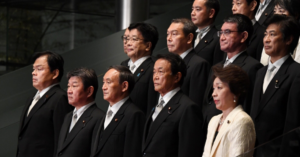
The new cabinet was formed by Prime Minister Suga Yoshihide on September 16, 2020. With a lot of familiar faces at familiar posts, the Suga cabinet contains few surprises. It is a clear indication of Suga’s commitment to maintain Abe-era policies and priorities.

Despite his victories, Abe’s success could never match his ambition, and he leaves office with several objectives unfulfilled. Nonetheless, he leaves Japan changed in ways both big and small.
Langley Esquire Vice President Yutaka Matsuzaki reflects on more than 20 years’ experience as a policy secretary in the Diet, with lawmakers that include former Minister of Justice Yasuoka Okiharu and former Representative Koike Yuriko, currently the Tokyo Metropolitan Governor.

Chief Cabinet Secretary Suga Yoshihide is the clear frontrunner in the race to succeed Prime Minister Abe Shinzo, and he has portrayed himself as the continuity candidate.